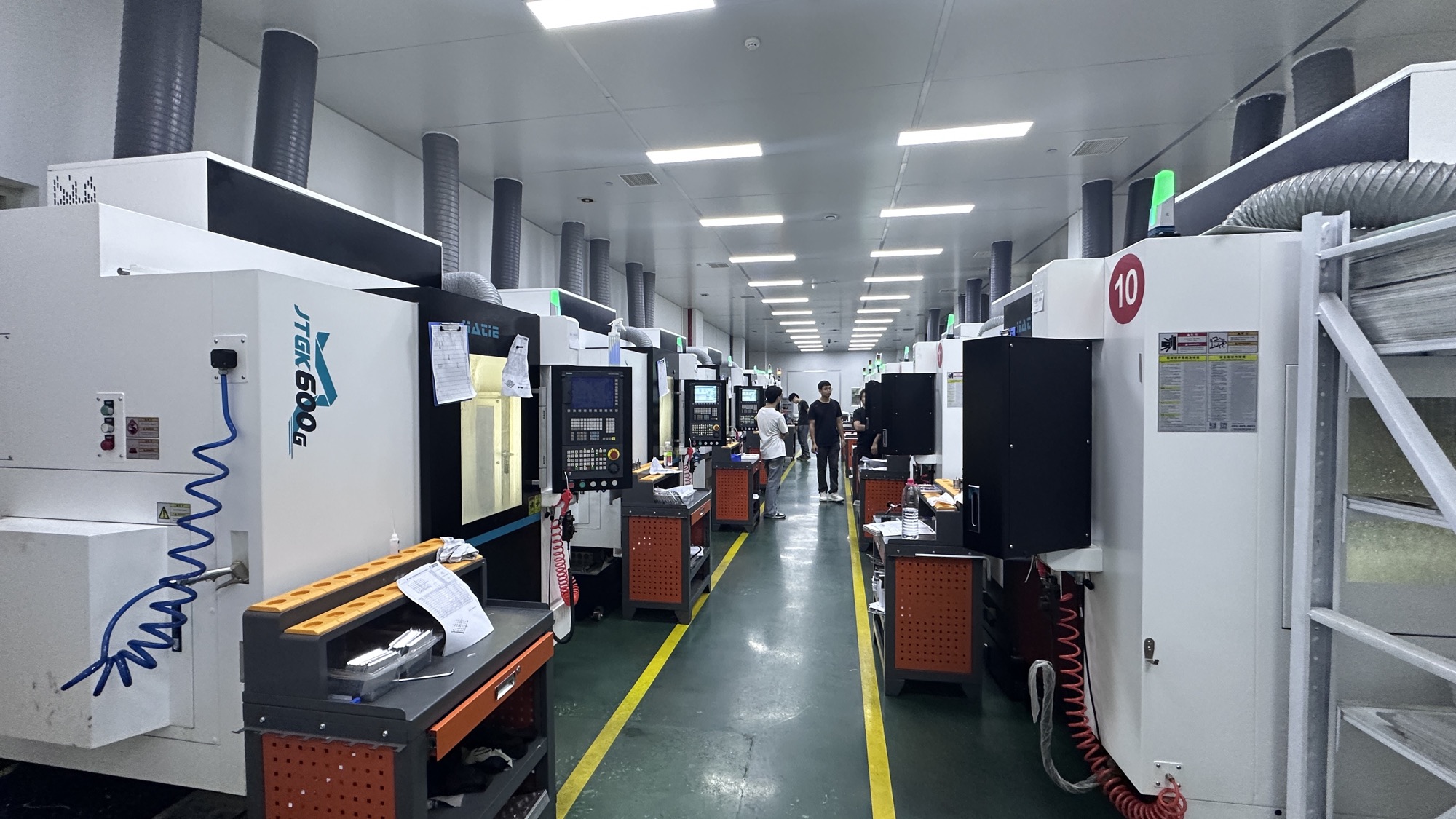
Custom CNC milled components
CNC milling uses rotating cutting tools to produce pockets, slots, flat faces, mounting holes and three-dimensional surfaces. We review every enquiry against the material, geometry, quantity, tolerances and inspection requirements shown on the drawing.
Three-axis milling is suitable for many prismatic components. Four-axis and five-axis strategies may reduce setups for multi-face features and complex geometries when the part and tolerance plan support that approach.
Design details that affect the process
Deep cavities, thin walls, small internal radii and limited tool access can affect cycle time, stability and achievable tolerance. Mark functional dimensions, mating surfaces and datum requirements clearly. If a surface is cosmetic, identify it separately from functional machined surfaces.
Materials and finishing
Projects may use aluminum, stainless steel, carbon steel, engineering plastics and other specified materials. Final feasibility depends on the exact grade, geometry and quantity. Surface treatments are coordinated to the drawing and must identify masked areas and dimensions controlled after finishing.